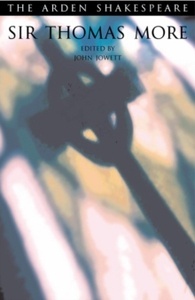
Editorial Arden
Fecha de edición febrero 2011 · Edición nº 1
Idioma inglés
EAN 9781904271482
544 páginas
Libro
encuadernado en tapa blanda
Dimensiones 131 mm x 198 mm
This edition of Sir Thomas More is the first to bring the play into the context of a major Shakespeare series, to provide a substantial critical analysis, and to offer a comprehensive modern stage history. The introduction deals with issues such as the strange involvement of the anti-Catholic spy-hunter Anthony Munday as chief dramatist, the place of Sir Thomas More as a Catholic martyr in Protestant late Elizabethan culture, and the play's representation of a multi-cultural London.The text itself, supported by a searching and detailed commentary, adopts a distinctive presentation that enables readers to keep track of the manuscript and the hands that produced it, whilst engaging with the play as a fascinating theatrical piece. Sir Thomas More deals with matters so controversial that it may never have reached performance on stage.
The authors' determination to deal with rioting and religious politics led to a play that is compelling in its own right but also intriguing as a document of what could, and could not, be articulated in the early modern public theatre. Surviving only as a manuscript text on which Shakespeare was thought to have worked, it can be considered to be the most important play manuscript of the period, owing to its highly complex witness to collaboration between dramatists and to censorship.
P B William Shakespeare /B ha sido considerado unánimemente como el escritor más importante de la literatura universal. Se mantiene que nació el 23 de abril de 1564 y consta que fue bautizado, tres días más tarde, en Stratford-upon-Avon, Warwickshire.<br> P Cuatro años después de su llegada a Londres hacia 1588, ya había obtenido un notable éxito como dramaturgo y actor teatral, lo que pronto le valió el mecenazgo de Henry Wriothesley, tercer conde de Southampton. De haberse dedicado únicamente a la poesía, Shakespeare habría pasado de todas formas a la historia por poemas como I Venus y Adonis /I , I La violación de Lucrecia /I o sus Sonetos. Sin embargo, fue en el campo del teatro donde Shakespeare realizó grandes y trascendentales logros. No en vano es el responsable principal del florecimiento del teatro isabelino, uno de los mascarones de proa de la incipiente hegemonía mundial de Inglaterra.<br> P A lo largo de su carrera escribió, modificó y colaboró en decenas de obras teatrales, de las cuales podemos atribuirle plenamente treinta y ocho, que perviven en nuestros días gracias a su genio y talento. William Shakespeare murió el 23 de abril de 1616 en su ciudad natal, habiendo conocido el favor del público y el éxito económico.<br>
|
||||||