
Walden and Civil Disobedience
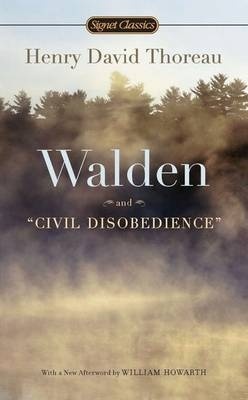
Editorial Signet
Fecha de edición julio 2012 · Edición nº 1
Idioma inglés
EAN 9780451532169
336 páginas
Libro
encuadernado en tapa blanda
Dimensiones 107 mm x 171 mm

Resumen del libro
Henry David Thoreau reflects on life, politics, and society in these two inspiring masterworks: Walden and Civil Disobedience.
In 1845, Thoreau moved to a cabin that he built with his own hands along the shores of Walden Pond in Massachusetts. Shedding the trivial ties that he felt bound much of humanity, Thoreau reaped from the land both physically and mentally, and pursued truth in the quiet of nature. In Walden, he explains how separating oneself from the world of men can truly awaken the sleeping self. Thoreau holds fast to the notion that you have not truly existed until you adopt such a lifestyle and only then can you reenter society, as an enlightened being.
These simple but profound musings as well as Civil Disobedience, his protest against the government's interference with civil liberty have inspired many to embrace his philosophy of individualism and love of nature. More than a century and a half later, his message is more timely than ever.
Biografía del autor
Henry David Thoreau (1817-1862), filósofo y poeta estadounidense, nació en la ciudad de Concord (Massachusetts), en la familia de un pequeño empresario. Se graduó en la Universidad de Harvard, pero nunca se implicó mucho en los estudios.<br> A los veinte años entabló una amistad sólida con Emerson y, estimulado por el filósofo, que tuvo una gran influencia en Thoreau, se convirtió en poeta. Antes de empezar a publicar sus versos había ejercido la docencia y había trabajado en el negocio de fabricación de lápices de su padre.<br> Publicó algunos libros como Natural History of Massachusetts (1842) o Un paseo invernal (1843) x{0026} x02014;este último sobre una de sus actividades más queridas, caminarx{0026} x02014; y, cuando tenía veintisiete años, comenzó a construir una cabaña junto al lago Walden, en la que viviría durante dos años de forma autosuficiente, experiencia que recogió más tarde en Walden (1854), su obra más importante.<br> Asimismo, Thoreau fue un enérgico activista abolicionista y escribió un manifiesto que defiende la preeminencia de la conciencia individual sobre las leyes, Desobediencia civil (1849), uno de sus ensayos más célebres.