"Hate you!" Laevsky said quietly, breathing heavily. "I've hated you a long time!""
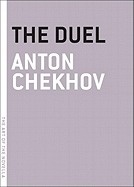
This new translation of the literary masterpiece-- which combines a beautiful romance with high suspense-- is here presented for the first time as a stand-alone volume.
One of Chekhov's most important lengthy works, this remarkable story gives a startling twist to his classic, ongoing study of bourgeois romance when he sets it on a collision course with a decaying, Czarist concept of honor. It ends in the ultimate Chekhovian observation: that fate is often ludicrous.
This Is A Melville House "HybridBook"
HybridBooks are a union of print and electronic media: Purchasers of this print edition also receive Illuminations--additional illustrated material that expand the world of Chekhov's novella through text and illustrations--at no additional charge.
To obtain the Illuminations for "The Duel "by Anton Chekhov, simply scan the QR code (or follow a url) found at the back of the print book, which leads to a page where you can download a file for your preferred electronic reading device.
"Illuminations" contains writings by Mikhail Lermontov - Ivan Goncharov - Alexander Pushkin - Herbert Spencer - Friedrich Nietzsche - Jack London - Thomas Paine - Francis Bacon - Charles McKay - And a guide to the game of vint.
Full-color illustrations include: William Hogarth - James Joseph Tissot - Jan Steen - "The Shahnameh" and more.
Also Included: "Against The Duel: Writing In Protest of Dueling"
Contributor Bio: Chekhov, Anton Pavlovich
Most famous for his plays "The Cherry Orchard," "The Seagull," "Three Sisters," and "Uncle Vanya," Anton Chekhov is one of Russia's most highly regarded dramatists and short-story writers.
 Cerrar



 Volver