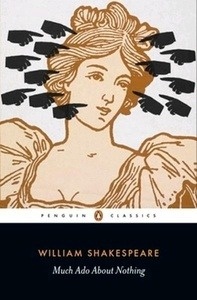
With a dazzling display of William Shakespeare's fondness for wit and wordplay, Much Ado About Nothing is a high-spirited comedy, edited with notes by R.A. Foakes, and an introduction by Janet Dillon. 'Some, Cupid kills with arrows, some, with traps'.
Proud, vivacious Beatrice and a high-spirited rake Benedick both claim that they are determined never to marry. But when good-hearted mischief-maker Don Pedro tricks them into believing that each harbours secret feelings for the other, Beatrice and Benedick begin to question whether their witty banter and sharp-tongued repartee conceals something deeper. Schemes abound, misunderstandings proliferate and matches are eventually made in this sparkling and irresistible comedy, famously adapted by Kenneth Branagh in a film starring Keanu Reeves and Emma Thompson.
This book contains a general introduction to Shakespeare's life and Elizabethan theatre, a separate introduction to Much Ado About Nothing, a chronology, suggestions for further reading, an essay discussing performance options on both stage and screen, and a commentary. William Shakespeare (1564-1616) was born to John Shakespeare and Mary Arden some time in late April 1564 in Stratford-upon-Avon. He wrote about 38 plays (the precise number is uncertain), many of which are regarded as the most exceptional works of drama ever produced, including Romeo and Juliet (1595), Henry V (1599), Hamlet (1601), Othello (1604), King Lear (1606) and Macbeth (1606), as well as a collection of 154 sonnets, which number among the most profound and influential love-poetry in English.
 Cerrar



 Volver