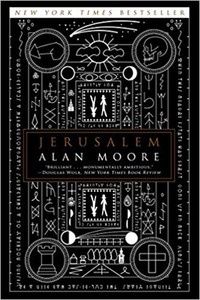
An opulent mythology for those without a pot to piss in, through the labyrinthine streets and pages ofJerusalem tread ghosts that sing of wealth and poverty; of Africa, and hymns, and our threadbare millennium. They discuss English as a visionary language from John Bunyan to James Joyce, hold forth on the illusion of mortality post-Einstein, and insist upon the meanest slum as Blake's eternal holy city. Fierce in its imagining and stupefying in its scope, Alan Moore's epic novel, Jerusalem, is the tale of Everything, told from a vanished gutter. Begging comparisons to Tolstoy and Joyce, this magnificent, sprawling cosmic epic (Guardian) by Alan Moore?the genre-defying, groundbreaking, hairy genius of our generation (NPR)?takes its place among the most notable works of contemporary English literature. In decaying Northampton, eternity loiters between housing projects. Among saints, kings, prostitutes, and derelicts, a timeline unravels: second-century fiends wait in urine-scented stairwells, delinquent specters undermine a century with tunnels, and in upstairs parlors, laborers with golden blood reduce fate to a snooker tournament. Through the labyrinthine streets and pages of Jerusalem tread ghosts singing hymns of wealth and poverty. They celebrate the English language, challenge mortality post-Einstein, and insist upon their slum as Blake's eternal holy city in Moore's apotheosis, a fourth-dimensional symphony (Entertainment Weekly). This brilliant . . . monumentally ambitious tale from the gutter is a massive literary achievement for our time?and maybe for all times simultaneously (Washington Post). 1 map; 3 illustrations
 Cerrar



 Volver