Editorial Amberley Publishing
Fecha de edición marzo 2015 · Edición nº 1
Idioma inglés
EAN 9781445644219
320 páginas
Libro
encuadernado en tapa blanda
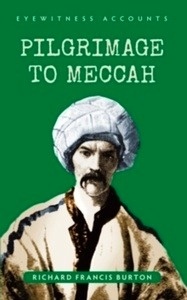
The journey that made Richard Burton famous as a traveller and explorer in the nineteenth century was a pilgrimage to Mecca, which he carried out disguised as a Pashtun tribesman from what is now north-western Pakistan or Afghanistan. Having spent seven years in India with the army of the East India Company, Burton was familiar with the customs and languages but the journey, travelling from Alexandria in Egypt south to the Red Sea and then from the coast of the Arabian Peninsula, was difficult and his caravan was attacked by bandits. After the conclusion of his journey, Burton briefly served in the Crimean War, was hired by the Royal Geographical Society to explore Africa's east coast and was the first European to see Lake Tanganyika.
Later in his life, he would join the Diplomatic Service, serving in Fernando Po, Santos and Trieste among others. This famous account describes a journey forbidden to non-Muslims made by one of the great travellers, adventurers, writers and linguists of the Victorian age.
(Torquay, Inglaterra, 1821 - Trieste, 1890) fue un aventurero famoso por sus exploraciones en Asia y África y dominar veintinueve lenguas europeas asiáticas y africanas. Vivió en la India, visitó la Meca disfrazado de árabe y fue autor de la primera traducción íntegra al inglés de "Las mil noches y una noche" y el "Kama Sutra". Descubrió el lago Tanganica, conoció de cerca a las tribus salvajes del Far West y cofundó junto a James Hunt la Sociadad Antropológica de Londres. Fue cónsul británico en la isla africana de Fernando Poo, Santos (Brasil), Damasco (Siria) y Trieste (Italia) y en 1866 recibió el título de Sir del Imperio Británico.
|
||||||