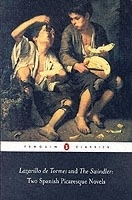
Being a thief isn't just a job, it's a liberal profession'
These Spanish picaresque novels focus on the adventures of two unlikely heroes delinquent pícaros living by their wits among corrupt priests and prostitutes, beggars and idle gentlemen, thieves, tricksters and murderers. The tales are sharply critical of the Church and conventions of nobility, and grotesquely exaggerated depictions of the criminal underworld. The anonymous Lazarillo de Tormes (1554) provided a literary model for Cervantes in Don Quixote and describes the ingenious ruses employed by a boy from Salamanca to outwit a succession of disreputable masters. Francisco de Quevedo's The Swindler (1626) is a comic, yet brutal and sordid, account of a servant who wants to become a gentleman but ends up as a cardsharp and a common criminal.
For this edition Michael Alpert has updated his translation from the original Penguin Classics edition of 1969, with a new map, chronology of events, notes and bibliography. His revised introduction examines the historical, economic and social context of the picaresque novel, with a detailed discussion of each story.