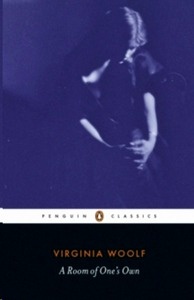
A Room of One's Own, based on a lecture given at Girton College, Cambridge, is one of the great feminist polemics, ranging in its themes from Jane Austen and Carlotte Bronte to the silent fate of Shakespeare's gifted (imaginary) sister and the effects of poverty and sexual constraint on female creativity. Virginia Woolf (1882-1941) is regarded as a major 20th century author and essayist, a key figure in literary history as a feminist and modernist, and the centre of 'The Bloomsbury Group'. This informal collective of artists and writers which included Lytton Strachey and Roger Fry, exerted a powerful influence over early twentieth-century British culture.
Between 1925 and 1931 Virginia Woolf produced what are now regarded as her finest masterpieces, from Mrs Dalloway (1925) to the poetic and highly experimental novel The Waves (1931). She also maintained an astonishing output of literary criticism, short fiction, journalism and biography, including the playfully subversive Orlando (1928) and A Room of One's Own (1929) a passionate feminist essay. If you enjoyed A Room of One's Own, you might like Woolf's Orlando, also available in Penguin Modern Classics.
'Probably the most influential piece of non-fictional writing by a woman in this century'Hermione Lee, Financial Times
 Cerrar



 Volver